The Unseen Toll: Washington's 'Secret War' and the Echo of Jamaame's Silence
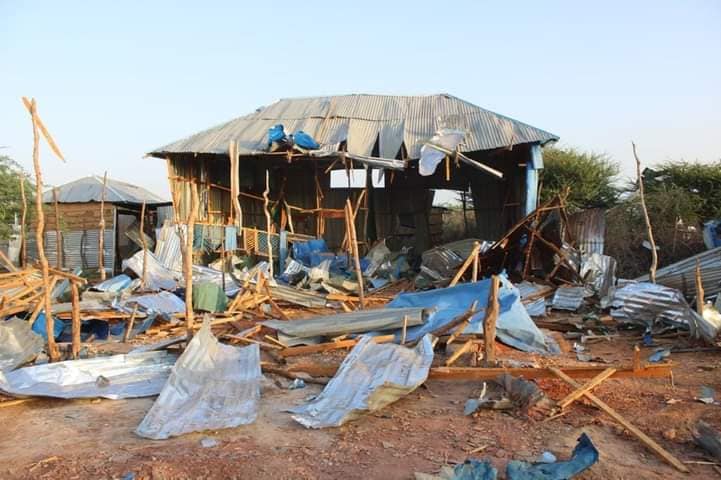
On November 15, 2025, the serene morning in Jamaame, southern Somalia, shattered into a tragedy that the United States refuses to acknowledge. What began with the "haunting high-pitched hum" of unseen objects ended with a family obliterated and a grim record set for civilian casualties in a US operation.
A US airstrike descended upon Jamaame shortly after 9 am, devastating the home of Abdullahi Mohamed Abo Sheikh Ali, a farmer, and claiming the lives of at least 12 civilians. Among the dead were eight children, including Abdifatah (10), Abdinasir (7), Hussein (6), and Abdurahman (4), alongside their heavily pregnant mother, Safiyo Hassan Abukar. The Guardian's investigation, meticulously piecing together evidence from photographs, video, X-rays of shrapnel injuries, and witness testimony, presents a detailed account of this massacre. This account directly contradicts the US stance, which "refused to admit that a single civilian died in the town that day." The incident marks the deadliest US operation for civilians in Somalia during either Trump administration, a sobering benchmark not seen in 18 years since the infamous 1993 "Black Hawk Down" operation in Mogadishu.
The steadfast refusal by the US to admit civilian deaths in Jamaame, despite the Guardian's meticulous investigation, highlights a profound gap in accountability. This denial isn't merely a matter of public relations; it underpins the legally ambiguous nature of Washington's "secret war" in the Horn of Africa, where "hundreds of strikes have been carried out" with "no apparent accountability for civilian deaths." The absence of an official investigation into an incident described as the deadliest in nearly two decades underscores a systemic issue where the human cost remains unacknowledged and unaddressed.

This incident, claiming more innocent lives in a single operation than any US action in East Africa for 18 years, draws a stark historical parallel to the 1993 Black Hawk Down event. This escalatory trend under the Trump administration's "intensifying campaign in the Horn of Africa" raises critical questions about operational safeguards and intelligence efficacy. The fact that the US had not killed so many innocent people in a single incident in the east African country for 18 years suggests either a dramatic shift in targeting protocols or a severe degradation of intelligence gathering in densely populated areas.
The incident spotlights the troubling ambiguity surrounding the intended targets in these operations. With a family neighbourhood obliterated and children "ripped to pieces," fundamental questions emerge: "Who signed off the attack on a densely populated family neighbourhood? Why and who, if anyone, was the intended target?" The lack of clarity around these decisions, coupled with the absence of accountability, creates a moral hazard, potentially eroding international norms regarding civilian protection and fueling long-term instability in regions already vulnerable to conflict.
The sustained and intensifying US campaign in the Horn of Africa, characterized by hundreds of strikes under the Trump administration, operates within a framework described as "legally ambiguous." The events of 15 November 2025 in Jamaame don't merely represent an isolated tragedy but rather a critical lens through which to examine the broader strategic implications of such operations. Without transparency and mechanisms for accountability, the long-term consequences of this "secret war" on regional stability and local perceptions of justice could be profound, potentially undermining stated objectives and inadvertently exacerbating cycles of violence.
The shattered remains of Abdullahi Mohamed Abo Sheikh Ali's home and the "ripped to pieces" bodies of his grandchildren in Jamaame stand as a silent, yet deafening, indictment of a war conducted in the shadows. The US's unwavering refusal to admit civilian deaths, coupled with the absence of an investigation, casts a long shadow over its intensifying campaign in the Horn of Africa. Until the questions of intelligence failures, operational sign-off, and, critically, accountability are addressed, the promise of security for the region will remain elusive, overshadowed by the very human cost of operations conducted without transparency.