The Mirage of $300 Billion: Washington's Gambit on Iran's Economic Re-entry
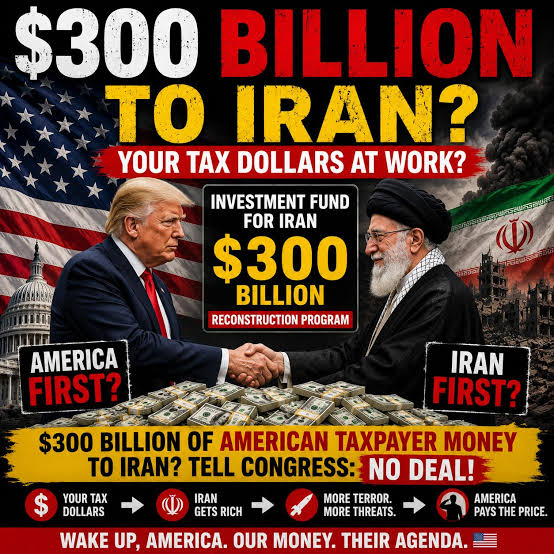
The US-Iran memorandum of understanding, slated for formal signing in Switzerland on Friday after its digital signing on Sunday, heralds a potential shift in geopolitical dynamics. At its core is the proposed establishment of a $300bn investment fund for Iran, envisioned as a cornerstone of a broader settlement to end a war that has notoriously triggered a global energy crisis and upended markets worldwide.
Yet, this substantial financial incentive is cloaked in a carefully constructed narrative by the Trump administration. US President Donald Trump himself took to Truth Social to dismiss claims of a direct US payout, labeling the "story that the US is paying Iran 300 million Dollars is Fake News." Vice President JD Vance echoed this sentiment on CBS News, adamantly stating that the fund is not a payout for Iranian enriched uranium, nor does it signify the release of "billions of dollars of assets." Instead, Vance framed it as a pathway to a "much better and much more prosperous future" for Iran, contingent on its "performance" in adhering to the deal's obligations and allowing "real inspections of [its] nuclear programme."
This nuanced framing is critical given Trump's longstanding criticism of the 2015 nuclear accord, which he claimed delivered undue economic benefits to Tehran. The current deal aims to sidestep such criticisms by portraying the $300bn not as a direct government payment but as an investment opportunity. Vance explicitly stated that US money would not be injected, clarifying that the fund would be "funded by the Gulf Coast coalition" and comprise opportunities for companies "eager to invest in Iran," as per sources quoted by The New York Times. This structure is a calculated move, designed to manage perceptions around a politically sensitive issue.

From Washington’s perspective, this arrangement offers a strategic advantage. Muhanad Seloom, a non-resident senior fellow at the Middle East Council on Global Affairs, aptly described it as a "no-lose solution for Washington." He argued that if Iran reforms, the administration can claim credit for peace; if it fails, the US incurs no financial loss, with the Gulf Coast coalition and private investors carrying the risk. This setup, Seloom noted, was specifically designed to circumvent the 'optics' of directly releasing Iran's frozen funds, which official reports and experts estimate exceed $100bn.
This approach signals a profound shift in leveraging economic incentives for diplomatic ends. For years, Iran’s economy has been crippled by sanctions imposed by the United States and other nations, initially following the 1979 Islamic revolution and later amplified due to its nuclear and ballistic missile programmes. These measures have severely restricted Tehran’s ability to access its own assets, including oil revenues frozen in foreign banks. The proposed investment fund, while not a direct lifting of sanctions or asset release, offers a structured re-entry into the global economy, providing a new channel for capital infusion without the politically charged implications of a direct governmental handout.
Such an initiative carries significant implications beyond the immediate geopolitical chessboard. The re-engagement of Iran, a nation whose economy has been choked by sanctions, could reshape regional trade dynamics and potentially impact global energy markets, especially given its role in the global energy crisis mentioned in the context of the initial war. The conditional nature of the fund places the onus firmly on Iran to meet its obligations, transforming economic opportunity into a powerful leverage point for international compliance. The world watches to see if this carefully crafted financial architecture can truly usher in a new era of stability, or if the $300bn prospect remains largely a mirage in the desert of complex diplomacy.