Kenya's AI Capital Aspirations: Decoding the 'Potential Collaboration' with OpenAI
For a nation that frequently declares its intent to become Africa’s artificial intelligence (AI) capital, Kenya demonstrates a peculiar tendency to celebrate conversations as if they were tangible investments. This pattern was on full display following President William Ruto’s recent announcement.
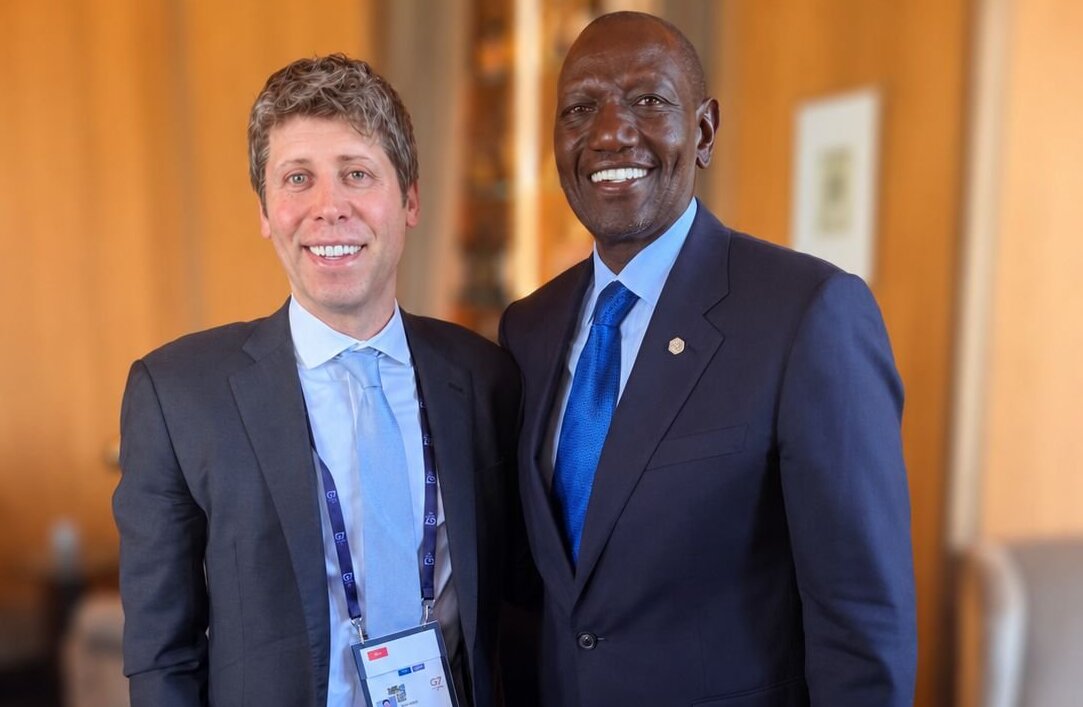
On Wednesday, President Ruto confirmed a meeting with OpenAI chief executive Sam Altman, held on the sidelines of the G7 Summit in Évian-les-Bains, Haute-Savoie, France. The core of their discussion, as articulated by the President on an X post, revolved around the establishment of Nairobi as the home for the first OpenAI Academy initiative in Eastern Africa, aiming to expand AI education and strengthen digital skills. Ruto underscored the objective of harnessing emerging technologies for youth opportunities, innovation, and to ensure Africa's meaningful role in the digital economy's future.
While the sentiment is difficult to dispute, the substance of the announcement remains opaque. The official statement offered no investment figures, binding agreements, or concrete timelines. Instead, it described discussions around “potential collaboration,” a phrase expansive enough to encompass anything from a series of online workshops to a permanent institutional presence. This ambiguity, as the source critically notes, offers a telling insight into Africa’s current position within the global AI economy.

At this juncture of AI development, much of Africa appears to pursue symbolism with an intensity matching its pursuit of infrastructure. Governments laud meetings with Silicon Valley titans, and Big Tech firms unveil training programmes, all while policymakers speak of their countries as prospective AI hubs. The discourse has become notably aspirational. The global AI race, fundamentally, is contested over three scarce resources: compute, capital, and talent. Here, developed economies like the United States and China exert dominance.
Most African nations, Kenya included, possess comparatively little of this core infrastructure. Their undeniable comparative advantage, however, lies in their people. This fundamental reality explains why education has abruptly become the central pillar of AI diplomacy across the continent. Training programmes are significantly less expensive to implement than constructing vast data centres. They are efficient goodwill generators, provide favorable headlines for politicians, and produce measurable outcomes in the form of graduates and certificates. Crucially, they enable governments to demonstrate active participation in the AI revolution without necessitating significant public resource commitments.
OpenAI, for its part, understands this dynamic perfectly. The company has historically leveraged education as a strategic component of its global expansion strategy. This approach has been successfully deployed in regions such as India, Greece, Italy, and Jordan. For OpenAI, every developer trained on its proprietary models represents a potential long-term user, and every university partnership serves to fortify its broader ecosystem. While undoubtedly a beneficial outcome for those receiving training, this strategy is also a calculated move to extend its market influence and developer base.